
The earliest PS3s could run PS2 games. Those were nice, rare, and expensive.
I wish they’d kept up with the hardware backwards compatibility.
The earliest PS3s could run PS2 games. Those were nice, rare, and expensive.
I wish they’d kept up with the hardware backwards compatibility.


Real patriots demand private investment in carbon capture only.

It is pretty lack luster. I was hoping there would have been at least one more layer of depth that might’ve let me choose between offense and defense rather than just both.
But to me: duplicating all new crafting materials and filling a lot of places with loot that can be purchased infinitely in the base game is more of a drag, however. Crafting is the original sin of Elden Ring.
The disasters like Chernobyl and Fukushima are symptoms of a greater issue: construction and maintenance of an extremely volatile and sensitive process reliant upon the integrity of infrastructure and quality of manpower.
Nuclear requires a stable society and economy flush with resources and education and little to no risk of political stability.
Those places are welcome to invest heavily into nuclear while CO2 concentrations build up as emmissions continue unabated.
The global leader in solar and wind is China. As a result those things are now communism and we can’t have them.
Sort of. They front loaded the benefits of specific upgrades so you felt more buffed early on. So the new stuff scales more akin to sacred tears for flasks.
Honestly probably a worthwhile change. Hooks players in better.

That is pretty accurate. There are a lot of key words that simply cannot be used in political discourse, leaving it almost impossible for advocate for policies that benefits the marginalized. It is a very effective method, as is so often demonstrated.
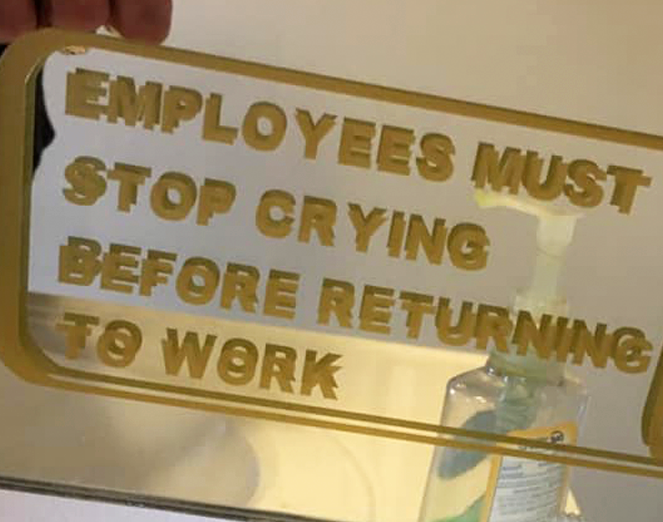
Crying broken shell of an art student not pictured.

Yes, where Mitt Romney is popular Trump’s endorsement doesn’t have as much power. This was just as true in 2018.
If you wany a rural setting you’re probably fucked.
If you’re looking for a SC kind of ‘city’ I would suggest perhaps Colorado, or something like Bend Oregon, or Spokane Washington. More isolated cities without large populations and also surrounded by that rural character.
Fewer turns? I am almost positive there are two sections of switchbacks across two mountain passes in that ‘alternate’ route.

Yeah those corpos tipping the scales for progressives. Such a thing.
60 vigor at level 80 is 60 vigor at level 700.
Having played invasions, many many people dont level up health so they’re a one shot kill already. It is a comical reality of how people play the game: never levelling their health pool.
We have figured out how to no hit Elden Ring. There’s walkthroughs and guides.
We haven’t figured out how to no hit the DLC. The walkthroughs and guides for it are being written now though. Once those are all up this whole refrain of difficulty will pass as people will be able to spoil any surprises and feel better about it.
It is weird because it isn’t a single player game. It can be if people take it offline, and on PC: there’s mods to hell. They can cheat and singleplayer it up all they want. So it is odd to me that people want what they already have and others are mad that they have it.
Playstation players though are a little stuck without more technical efforts to cheat.

I read this mid sip of coffee at my workststion.
No the decisions weren’t necessary for all that, but for the one simple graph tracking campaign costs it was particularly salient.
The sudden spike coincides with the Citizens United and SpeechNow SCOTUS decisions.
Friend, I think the feeling is mutual because damn that right there’s the pedantry. That’s a hole you dug and jumped in yourself. So yeah, be quiet down there.


The few outspoken conservatives I know hate solar and wind because China is doing solar and wind. It is also their chief reason for not liking rail, or building ports, or TikTok.